RMS vs PMS explained for short-term rental hosts: what a property management system and a revenue management system do, how they connect, and costs.
Updated October 2026. Written and reviewed by the STR Market Superhost team. Prices checked on October 23, 2026.
PMS and RMS are two of the most common acronyms in short-term rental software, and they are easy to mix up. A property management system (PMS) runs your daily operations: calendars, bookings, guest messages and cleaning. An RMS, in hospitality, almost always means a revenue management system: the software that sets your nightly rates.
Some vendors also use RMS for risk management: guest screening, damage protection and noise monitoring. Because both meanings come up when hosts search this topic, this guide covers all three tools, how they differ, how they connect and which ones you actually need.
| PMS | Revenue management system | Risk management tools | |
|---|---|---|---|
| Main job | Run daily operations | Set the best nightly price | Prevent and cover losses |
| Core features | Channel sync, unified inbox, automated messages, tasks, payments, owner statements | Dynamic pricing, minimum stay rules, comp sets, market data, forecasting | Guest screening, ID checks, noise monitoring, damage protection, insurance |
| Main question it answers | Who is staying, when, and what needs to happen? | What should each night cost? | Is this guest and this stay safe? |
| Typical pricing | Per listing or flat monthly plans | Flat per listing or a percentage of bookings | Per booking, per check or per device |
| Examples | Hospitable, Guesty, Hostaway, OwnerRez, Lodgify | PriceLabs, Wheelhouse, Beyond, DPGO, AirDNA Adapt | Truvi, Safely, Autohost, Minut, NoiseAware |
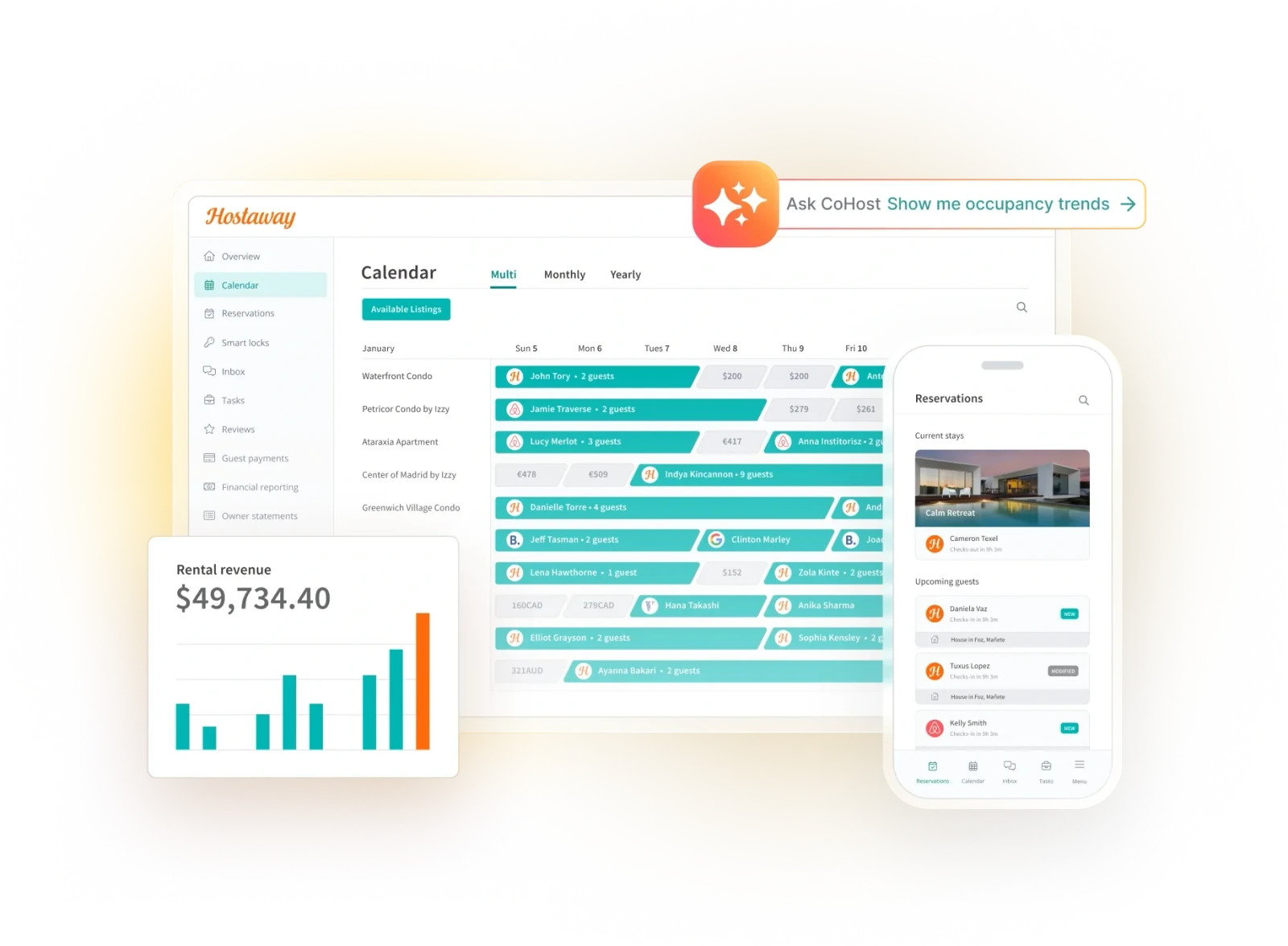
A PMS is the operating system of a rental business. It connects to Airbnb, Vrbo and Booking.com, keeps every calendar in sync so you avoid double bookings, and puts guest messages from every channel in one inbox. Most also automate check-in messages, create cleaning tasks from new bookings, collect payments and, for managers, produce owner statements.
Starting prices range from free (Hospitable's Essentials plan) and $9 per listing per month (Guesty Lite for 1 to 3 listings) to custom quotes for larger managers (Hostaway, Guesty Pro). Compare them all in our best PMS guide.
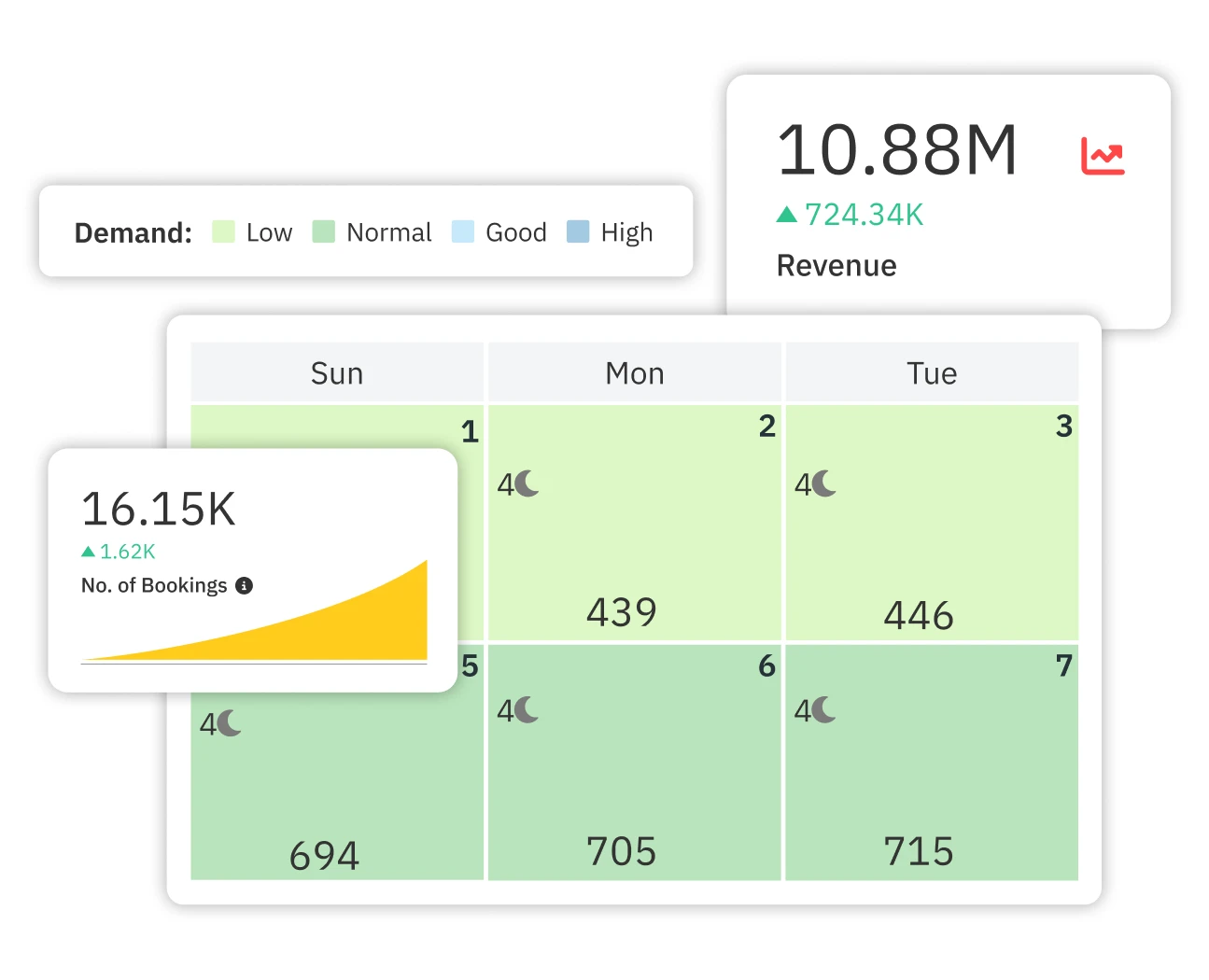
A revenue management system decides what each night should cost. It looks at demand in your market, local events, seasonality, how far ahead the date is and what comparable listings charge, then updates your prices daily. For short-term rentals, these tools are usually called dynamic pricing tools.
Prices vary by fee model. PriceLabs starts at $19.99 a month for the first listing with lower per-listing rates as you add more, Wheelhouse has a free tier then 1% of revenue or $19.99 per listing, and Beyond charges 1% of bookings on its Growth plan. See our dynamic pricing tools comparison for the full breakdown.

Some short-term rental vendors use RMS to mean risk management: the tools that reduce fraud, parties and damage. These include guest screening and ID verification (Autohost, Truvi, Safely), noise and occupancy monitoring (Minut, NoiseAware) and damage protection or insurance (Truvi, Waivo, Proper Insurance, Steadily).
On Airbnb, you already get some of this through AirCover for Hosts, which includes guest identity verification, reservation screening and host damage protection. Bookings from other channels and your own website need separate protection. Our guest screening and damage protection guide compares the options and prices.
The tools are designed to connect, not compete. In a typical setup:
Before you buy any tool, check that it integrates with your PMS. A pricing tool that cannot sync with your PMS means copying rates by hand, which defeats the purpose.

Many PMS platforms now include basic dynamic pricing. Hospitable includes it from its Host plan, Lodgify includes it on its Professional and Ultimate plans, and Guesty Pro includes revenue management. Built-in pricing is a good start for one or two listings.
Dedicated revenue management tools usually go deeper, with more control over minimum stays, gap nights, comp sets and market data. Most hosts with three or more listings, or in competitive markets, end up using a dedicated tool alongside their PMS.
| Your situation | PMS | Revenue management | Risk tools |
|---|---|---|---|
| 1 listing, Airbnb only | Optional; Airbnb's tools may be enough | Helpful; start with a free tier or percentage plan | AirCover plus a proper insurance policy |
| 1 to 5 listings, several channels | Yes, to avoid double bookings | Yes | Screening for non-Airbnb bookings |
| 5 to 20 listings | Yes, with tasks and automation | Yes, a dedicated tool | Screening, noise monitoring, insurance |
| 20+ units or managing for owners | Yes, with owner statements | Yes, or a revenue management service | Screening on every booking, commercial cover |
Most often, revenue management system: the software that sets your nightly prices, also called a dynamic pricing tool. Some vendors also use RMS for risk management, meaning guest screening, noise monitoring and damage protection.
Not exactly. A channel manager syncs calendars and rates across booking sites. Most short-term rental PMS platforms include a channel manager, plus messaging, tasks, payments and reporting.
Yes. Most pricing tools can connect directly to Airbnb and Vrbo. But once you list on several channels, a PMS keeps calendars in sync and gives the pricing tool one place to send rates.
With one listing on one channel, you can often get by with neither. With multiple listings or channels, most hosts use both: a PMS for operations and a revenue management tool for pricing.
The major tools, including PriceLabs, Wheelhouse and Beyond, integrate with popular PMS platforms. Check the integration list on both sides before you start a trial.
Compare tools side by side in our PMS rankings, dynamic pricing rankings or the full software directory.
